
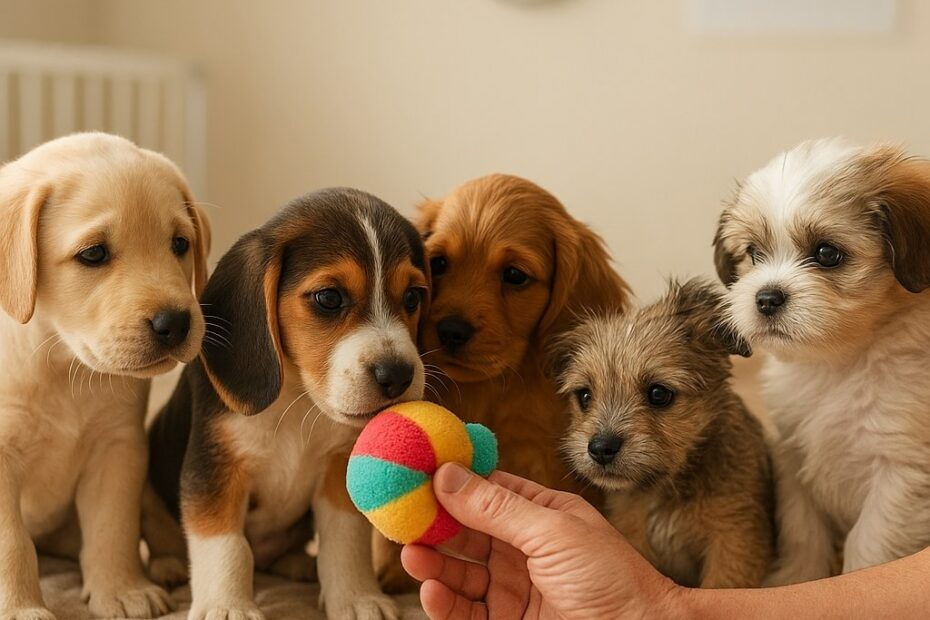
Bringing home a new puppy is one of life’s great joys — those oversized paws, the wobbly gait, the way they tumble headfirst into everything without a care in the world. But beneath all that adorable chaos, something remarkable is happening inside your puppy’s developing brain. The experiences they encounter in their first weeks of life are quietly, powerfully shaping the dog they will become.
Yet here’s the uncomfortable truth: most owners — even well-meaning, devoted ones — miss the most important window entirely. By the time many people begin thinking about socialisation, the critical period has already started closing. The consequences of that oversight can follow a dog for the rest of their life.
This article explores why early puppy socialisation matters so profoundly, what the science actually tells us about the critical development window, and what practical steps you can take — right now — to give your puppy the best possible start.
What Is Puppy Socialisation — And Why Does It Matter So Much?
Socialisation is often misunderstood as simply letting your puppy play with other dogs. In reality, it encompasses something far broader: the process of gently, positively exposing a puppy to the full range of sights, sounds, textures, people, animals, environments, and experiences they will encounter throughout their life.
The goal isn’t to overwhelm them. It’s to teach them, during a period when their brain is uniquely receptive, that the world is a safe and predictable place. A well-socialised puppy grows into a dog who can navigate new situations with confidence rather than fear.
The stakes are genuinely high. According to research published in the Journal of the American Veterinary Medical Association, behavioural problems are among the leading causes of dogs being surrendered to shelters or euthanised — and many of these problems are rooted in inadequate early socialisation. The American Veterinary Society of Animal Behavior (AVSAB) has been explicit on this point: incomplete socialisation during the first three months of life poses a greater risk to a dog’s long-term welfare than the risk of infectious disease exposure during that same period.
That’s a significant statement, and it challenges the long-held advice that puppies should be kept entirely indoors until their vaccination course is complete.
The Critical Socialisation Period: Understanding the Science
What Is the Critical Period for Puppies?
The critical socialisation period in puppies is generally defined by veterinary behaviourists as spanning from approximately 3 to 14 weeks of age, with some researchers suggesting the window may extend to around 16 weeks. During this time, a puppy’s brain is undergoing extraordinary neuroplastic development — it is literally wiring itself in response to the experiences it encounters.
Positive experiences during this window create neural pathways associated with confidence and curiosity. Negative experiences — or, critically, a lack of experiences — can create lasting associations with fear and anxiety.
Research conducted at the University of California, Davis, found that puppies who received structured socialisation exposure before 12 weeks of age demonstrated significantly lower rates of fear-based behaviour and aggression as adult dogs compared to those with limited early exposure.
Why Most Owners Miss It
Here’s where the problem lies. Most puppies go to their new homes at around 8 weeks of age — meaning nearly half the critical window has already passed before the new owner even picks them up. The remaining weeks are often consumed by house-training, settling in, and the general upheaval of new puppy ownership. Socialisation, if it happens at all, is frequently left until “after the vaccinations” — by which point the puppy may be 16 weeks or older, and the window has largely closed.
Additionally, many owners simply don’t realise what socialisation actually involves. Taking your puppy to the local park once isn’t sufficient. Neither is introducing them only to your family’s existing, placid older dog. True socialisation requires breadth, variety, and above all, positive experiences.

What Happens When Puppies Aren’t Properly Socialised?
The consequences of missed socialisation aren’t always immediately obvious. A puppy who was undersocialised might seem perfectly fine at home for months — even years. But stress triggers tend to surface in adulthood in ways that can be difficult to trace back to those early weeks.
Common outcomes of inadequate early socialisation include:
- Fear-based reactivity: Dogs who bark, lunge, or cower when encountering unfamiliar people, dogs, or environments
- Noise phobias: Extreme sensitivity to household sounds, traffic, fireworks, or thunderstorms
- Handling aversion: Anxiety or aggression during vet examinations, grooming, or nail clipping
- Generalised anxiety: A persistent state of unease in novel situations
- Aggression: Fear-driven defensive behaviour towards people or other animals
It’s worth emphasising that undersocialisation doesn’t just create behavioural inconvenience — it significantly compromises a dog’s quality of life. A dog who is frightened of the world cannot enjoy it. Everyday experiences that should be enriching become sources of chronic stress.
Puppy Socialisation Checklist by Age
Understanding what to prioritise at each stage helps ensure nothing important is missed. Here’s a practical breakdown:
Weeks 3–8: The Breeder’s Responsibility
Much of this period falls to the breeder or rescue organisation, which is why choosing a responsible source matters enormously. During this phase, puppies should ideally be:
- Handled gently and regularly by multiple people
- Exposed to common household sounds — vacuum cleaners, televisions, washing machines
- Introduced to different floor surfaces and textures
- Beginning to interact appropriately with their littermates (learning bite inhibition and social cues)
- Experiencing brief, positive separations from their mother
If you’re choosing a puppy, ask the breeder specifically what socialisation work they’ve undertaken. A breeder who shrugs at this question is telling you something important.
Weeks 8–12: The Golden Window at Home
This is the period when new owners have the greatest opportunity — and the greatest responsibility. Priorities during these weeks include:
- People: Men, women, children, people wearing hats, people using walking aids, people of different appearances and ages — aim for at least a dozen new, positive human encounters per week
- Environments: Car journeys, busy streets, quiet countryside, different indoor spaces
- Surfaces: Grass, gravel, wood flooring, carpet, metal grates
- Sounds: Traffic, doorbells, children playing, household appliances (sound recordings can be useful for controlled exposure)
- Other animals: Vaccinated, known, calm adult dogs are ideal — quality matters more than quantity
- Handling: Gentle touching of paws, ears, mouth, and tail — paired with treats — prepares puppies for vet visits and grooming
Weeks 12–16: Consolidating and Expanding
As the window begins to close, focus on consolidating positive associations and gently expanding into more challenging territory — busier environments, more varied dog interactions, and longer periods of calm observation from a safe distance. Enrolling in a well-run puppy socialisation class during this period can provide structured, supervised exposure to other puppies and people.
How to Socialise a Puppy with Other Dogs — Safely
This is one of the most commonly searched questions among new puppy owners, and the answer requires some nuance. The goal is not simply maximum dog contact — it’s positive dog contact with appropriate role models.
A single frightening encounter with an unpredictable or aggressive dog during the critical period can cause lasting damage, potentially undoing weeks of careful work. Choose your puppy’s canine companions carefully.
Practical guidance for dog-to-dog socialisation:
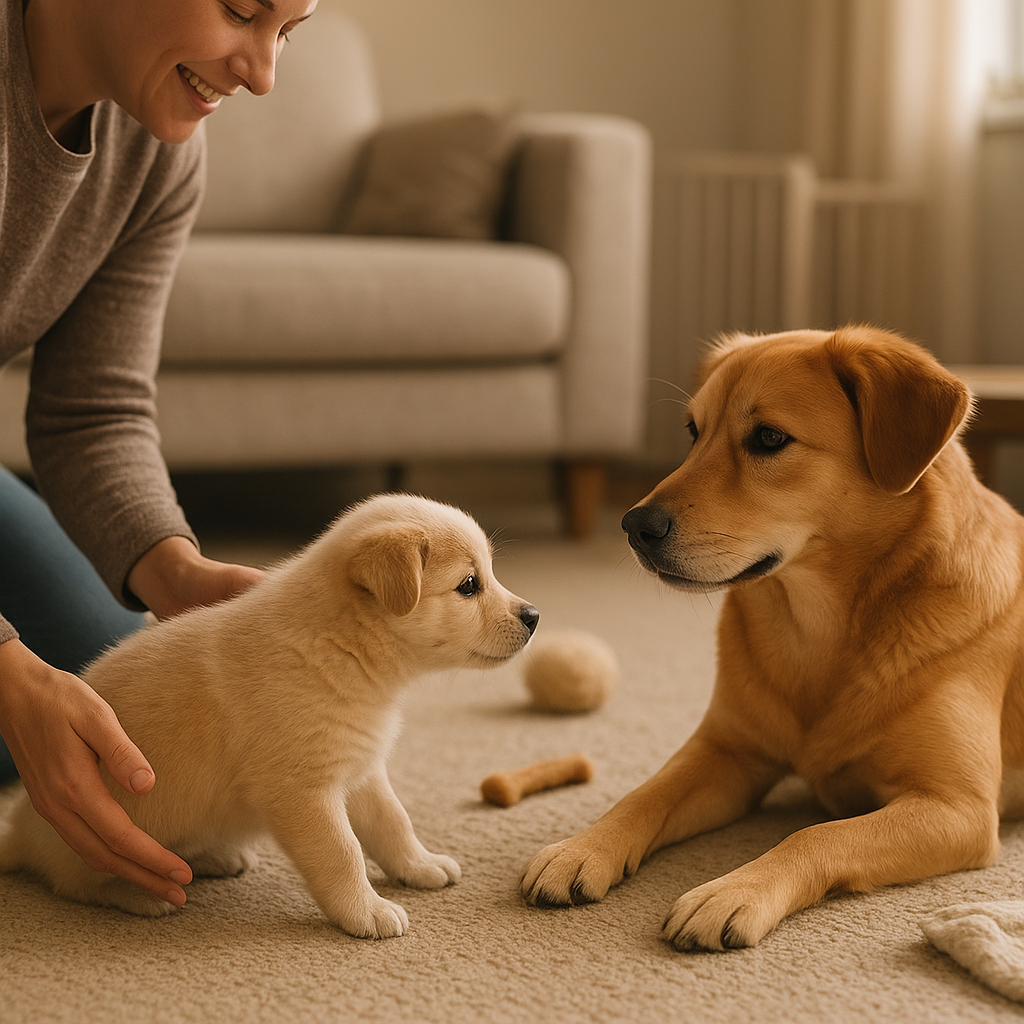
- Prioritise known, vaccinated adult dogs who are calm, patient, and have a good track record with puppies. Avoid unknown dogs in parks during the early weeks.
- Puppy classes are invaluable — they provide supervised interaction in a controlled setting, often with veterinary oversight. Look for classes run by qualified, reward-based trainers.
- Watch body language carefully. A puppy who is overwhelmed, hiding, or showing whale eye (whites of the eyes visible) needs a break. Socialisation should always feel safe to the puppy, not just busy.
- Short, positive sessions beat long, exhausting ones. Ten minutes of positive interaction followed by rest is far more valuable than an hour of overstimulating chaos.
On the question of vaccinations: the AVSAB’s position is clear — the behavioural risks of delaying socialisation until full vaccination outweigh the disease risks of careful, managed exposure. This doesn’t mean being reckless; it means being thoughtful. Carrying your puppy in public, visiting friends with vaccinated dogs, and attending reputable puppy classes are all appropriate during the pre-vaccination period. For a detailed breakdown of timing, our guide to your dog’s vaccination schedule explains what to expect at each stage.
Beyond Dogs: The Full Socialisation Picture
Perhaps the most common mistake owners make is focusing almost exclusively on dog-to-dog interaction while neglecting everything else. A puppy who loves other dogs but is terrified of car journeys, men in high-visibility jackets, or the sound of a hairdryer is not a well-socialised puppy.
Think of socialisation as building a vast library of positive experiences your puppy can draw on throughout their life. The more comprehensive that library, the more resilient the adult dog.
Some often-overlooked areas worth prioritising:
- Children: Even if you don’t have children at home, your puppy will encounter them. Supervised, calm introductions to well-behaved children are essential.
- Vet environments: Ask your veterinary practice if you can visit simply for a weigh-in and some treats — no examination, no needles. Building positive associations with the clinic before any stressful procedures take place is enormously valuable.
- Being alone: Socialisation isn’t just about exposure — it’s also about teaching a puppy to feel safe and settled independently. Short, positive periods of separation help prevent separation anxiety, which affects a significant proportion of pet dogs.
- Novel objects: Umbrellas, wheelie bins, bicycles, prams, mobility scooters — the everyday urban landscape is full of things that can startle an unprepared adult dog.
Common Puppy Socialisation Mistakes to Avoid
Even owners who understand the importance of socialisation frequently undermine their efforts through well-intentioned errors. The most common include:
- Flooding: Overwhelming a puppy with too much, too fast. Exposure should always be at the puppy’s pace, not the owner’s schedule.
- Forcing interaction: Pushing a reluctant puppy towards something they’re frightened of doesn’t build confidence — it deepens fear. Allow retreat and choice.
- Neglecting the emotional state: Socialisation only works if experiences are genuinely positive. A puppy who endures an experience whilst frightened has not been socialised — they’ve been sensitised to that stimulus.
- Stopping too early: Socialisation doesn’t end at 16 weeks. Adolescent dogs benefit enormously from continued positive exposure throughout their first year and beyond.
Learning to read your puppy’s signals during this process is just as important as the exposures themselves. Understanding natural dog behaviour patterns will help you recognise when your puppy is genuinely comfortable versus merely tolerating a situation — a distinction that makes all the difference to successful socialisation.
Conclusion
The first weeks of a puppy’s life represent a fleeting, irreplaceable opportunity. The critical socialisation period — roughly 3 to 14 weeks — is when a puppy’s brain is most open to learning that the world is safe, interesting, and worth exploring. Miss that window, and you may spend years managing the consequences.
The key takeaways are straightforward but require genuine commitment: begin socialisation early — don’t wait for vaccinations to be complete; prioritise breadth of experience, not just dog-to-dog contact; ensure every experience is positive rather than merely endured; and treat socialisation as an ongoing process, not a box to tick by 16 weeks.
The effort invested in those early weeks pays dividends for the entirety of a dog’s life — in confidence, resilience, and the simple joy of a dog who can move through the world without fear. That, ultimately, is what every puppy deserves.